To use direct lighting solutions one or more luminaries should be selected from the DIALux Database at first instance. Afterwards the selected luminaries should be added to a DIALux project. By clicking the button “direct planar lighting” in the DIALux toolbar it is possible to insert a new direct planar lighting solution.
Fig. 163 Selection of a direct planar lighting situation
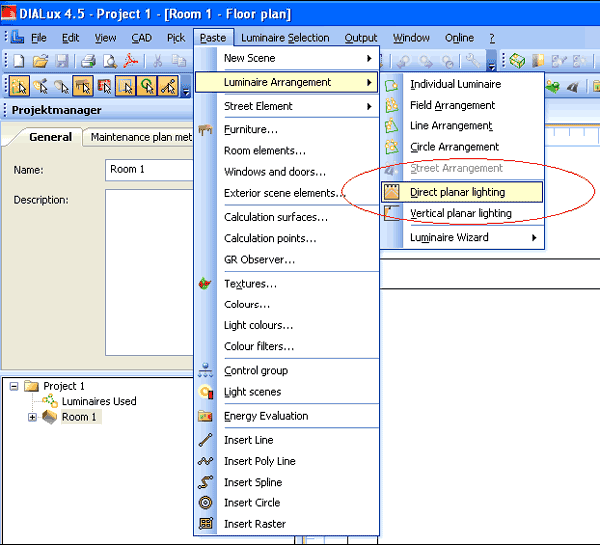
Another possibility to insert a direct planar lighting situation is the selection through “Paste / Luminaire Arrangement” in the DIALux Menu.
Fig. 164 Alternative solution to insert a direct planar lighting situation
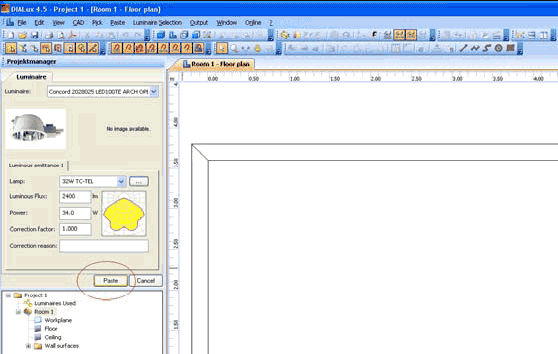
After having inserted a lighting situation clicking the left mouse button and moving the mouse simultaneously generates a rectangle in your actual room. This rectangle is the direct surface which should be illuminated. By clicking “Paste” in the window on the left all selected luminaries are inserted into the project respectively into the room.
Fig. 165 Insertion of selected luminaries into the direct planar lighting situation
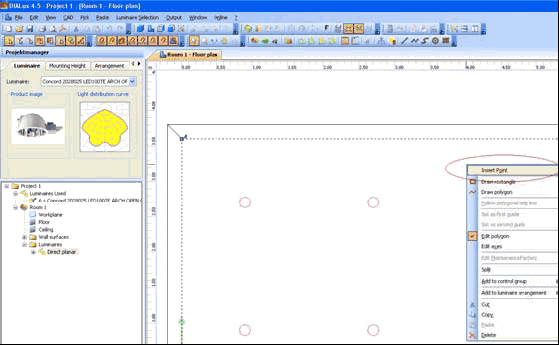
The geometry of the direct planar lighting can be modified arbitrarily. Therefore choose a point on the selected rectangle and shift it to the favoured position. While clicking the right mouse button within the geometry additional points can be inserted.
Fig. 166 Insertion of additional points to the lighting situation
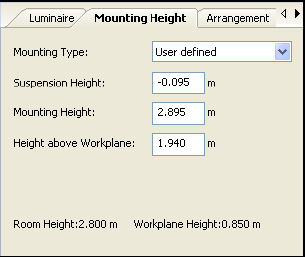
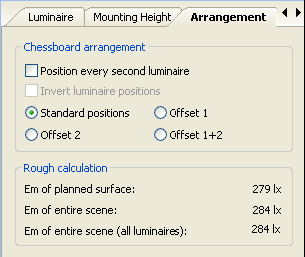
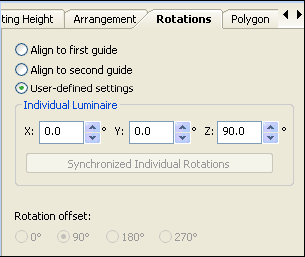
The project manager provides you with several possibilities to modify settings individually. Amongst others you are able to make changes in Mounting Height (Figure 167.1), Arrangement of luminaries (Figure 167.2) and Rotation of single luminaries (Figure 167.3).
Fig. 167 Changes in Mounting Height (1), Arrangement of luminaries (2) and Rotations of single luminaries (3) at vertical planar lighting solutions
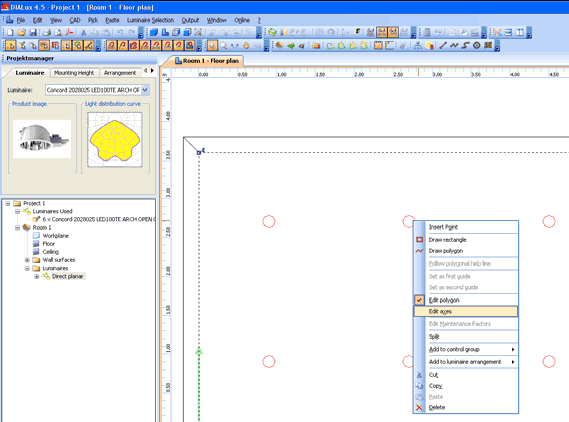
For editing the two different axes within the geometry simply click the right button of your mouse. The blue and red doted lines represent the two axes. On these axes the luminaries are arranged. By clicking the left mouse button and moving the mouse simultaneously the axes can be positioned.
Fig. 168 Editing the single axes – direct planar lighting